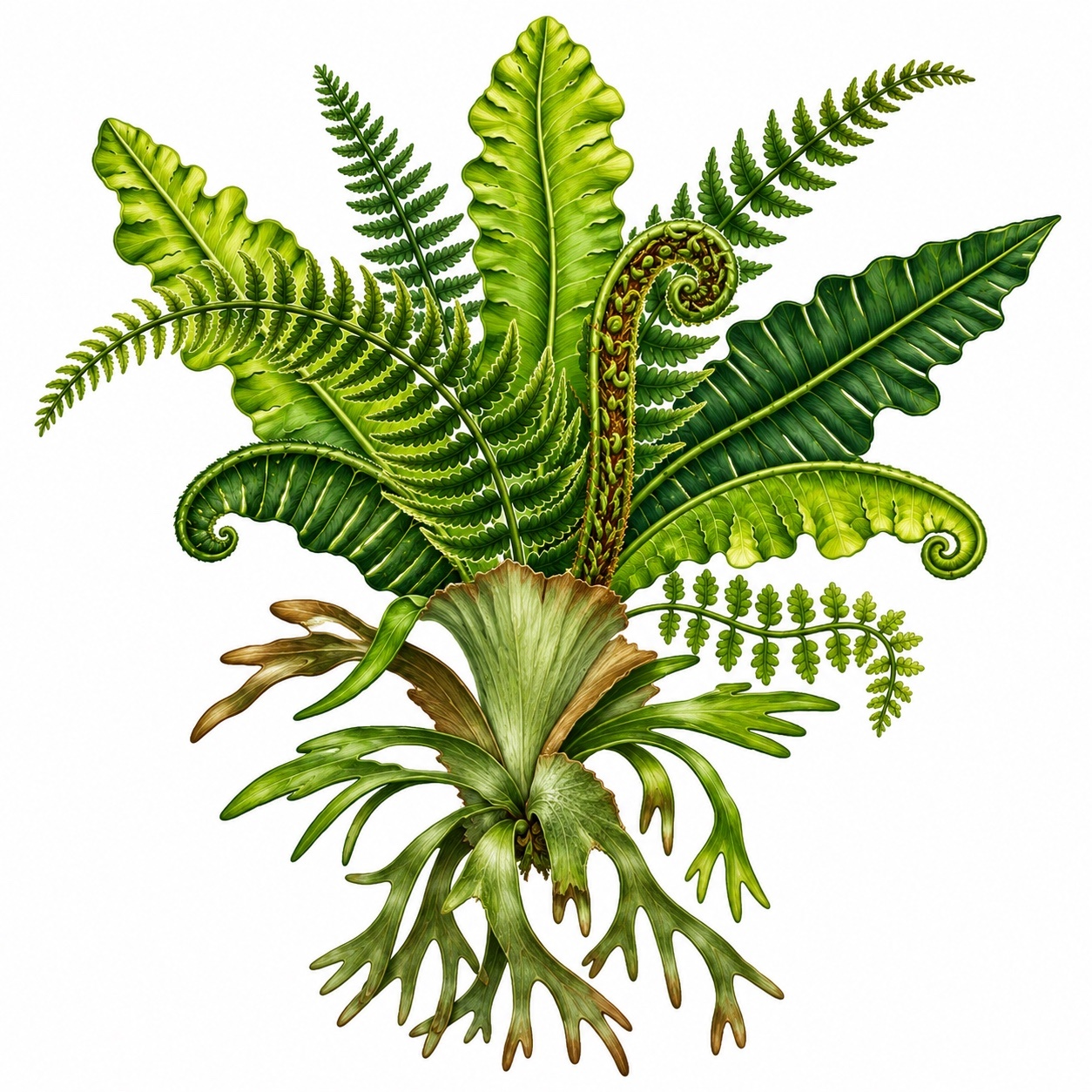
Ferns in hanging baskets
Ferns in hanging baskets or containers can brighten up your patio, verandah, shade house or living area, bringing a lovely feeling of coolness.
Choose a sheltered position
Established plants can become low-maintenance. For fantastic results, choose a well-lit area out of direct sun and preferably not in deep shade. Allow some air movement, but avoid strong winds. Ferns can grow under Perspex, tin, tiles or shade cloth.
Choose the right container
Wire frames with coconut fibre lining are commonly used. These suit plants needing good drainage and species with creeping “feet” that surround the outside of the basket. Plastic containers work well with other ferns, as do terracotta or glazed containers.
Keep the potting mix light
Many ferns suitable for hanging baskets are epiphytic. They need a very good potting mix with additions such as composted orchid mix or composted pine bark, vermiculite, perlite and charcoal to keep it light and very free-draining.
Caring for your baskets
Feed lightly and regularly
Fertilising can vary, particularly during the growing season. Small quantities of slow-release, liquid or powdered fertilisers work well. For liquid feeding, use a half-strength mixture regularly.
Rotate for an even shape
Add a fishing-line swivel where the hook meets the chain so the basket can be rotated. This encourages a rounded shape; otherwise, foliage tends to become one-sided. For very heavy baskets, use a suitable heavy-duty swivel available from hardware stores.
Hare’s Foot ferns
Davallia species, commonly called Hare’s Foot, Squirrel’s Foot or Rabbit’s Foot, are popular basket ferns. Wire-framed containers let the “feet” attach to the lining, eventually creating a ball effect. Some Davallia have a short period when most or all foliage dies back, followed by a fresh flush of growth.
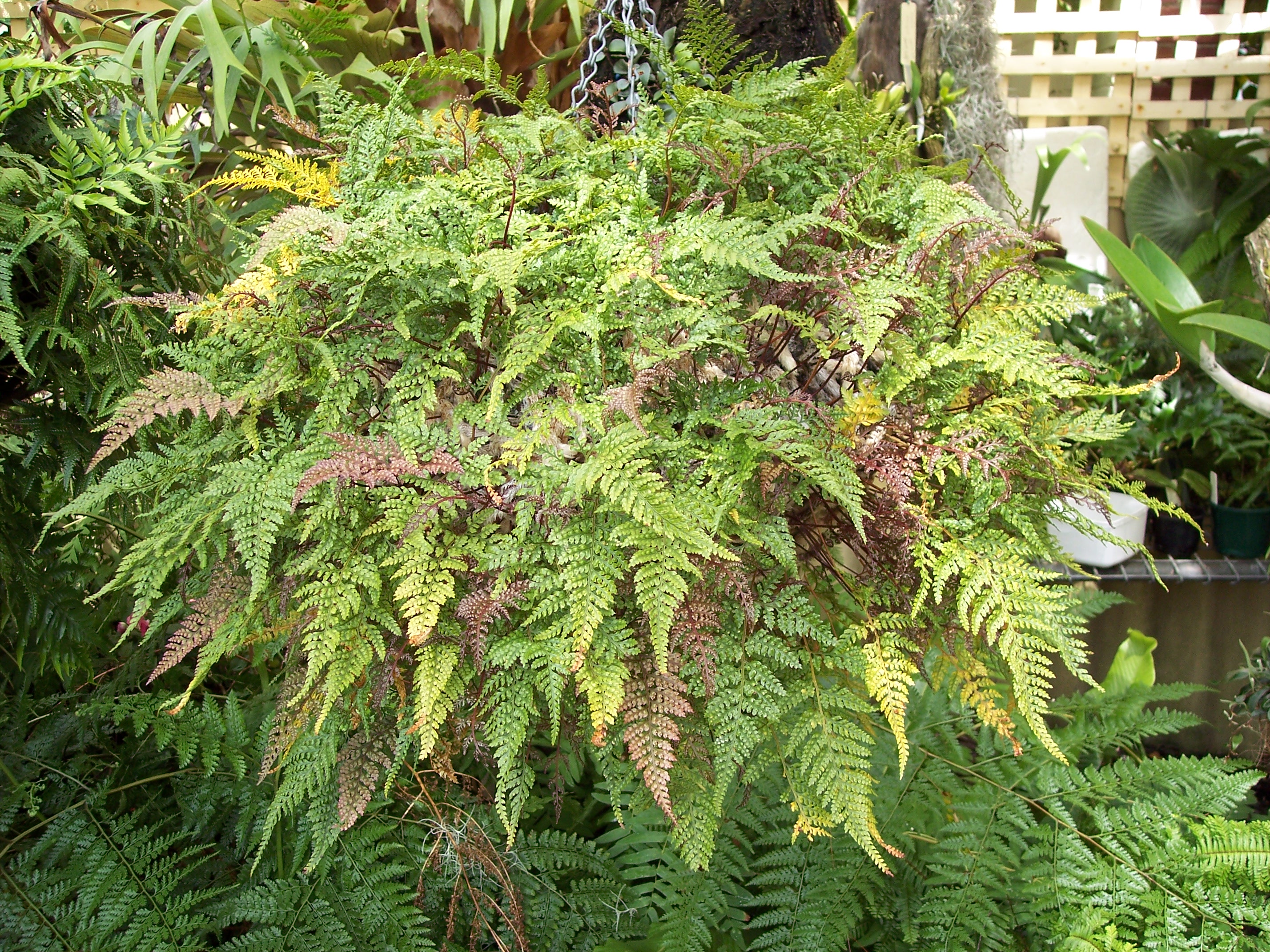
Humata tyermanii, the Silver Hare’s Foot, has whitish-grey “feet” and fronds that tend to be shorter and darker in colour.
Boston, Fishbone and Sword Ferns
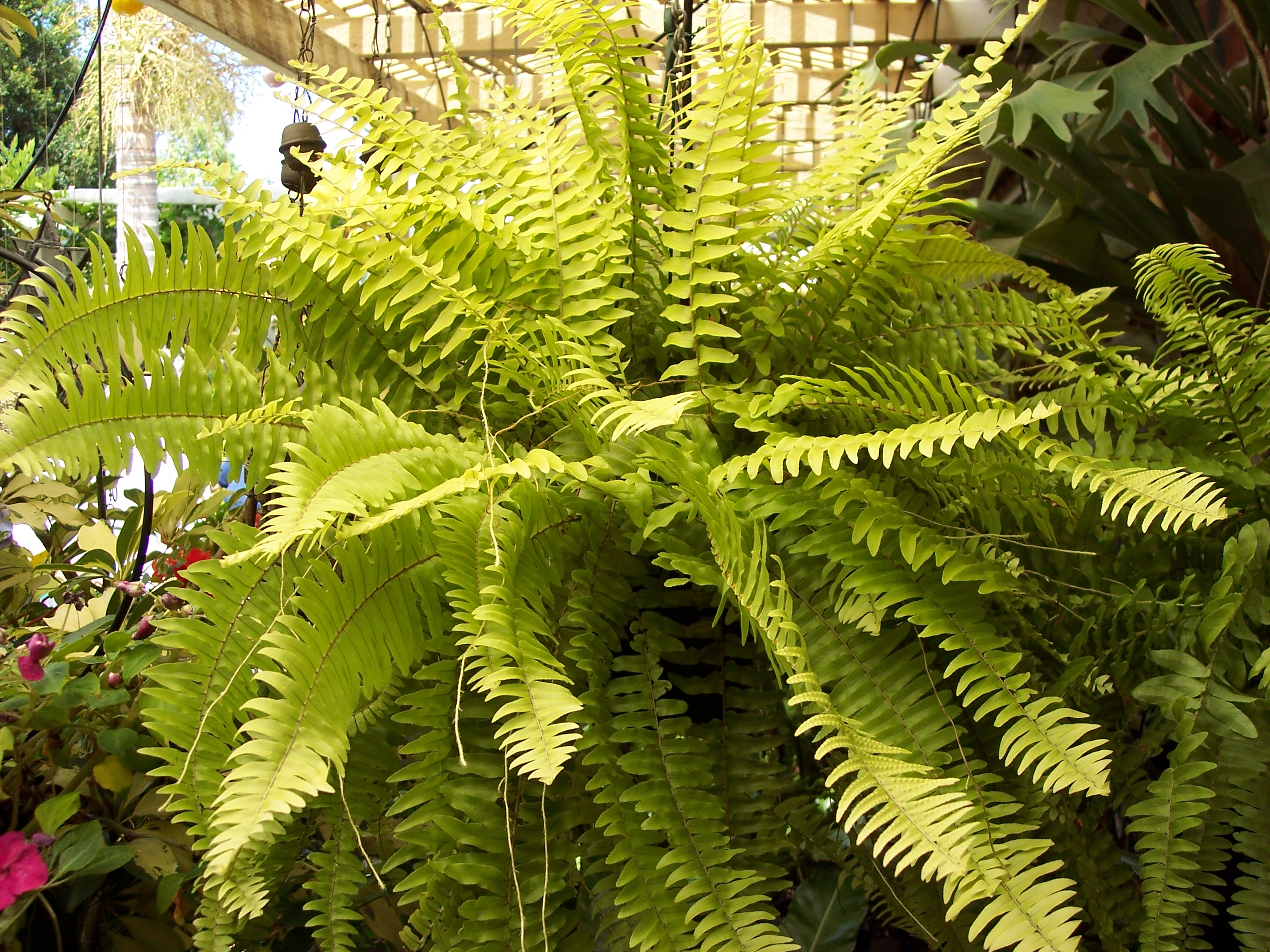
Nephrolepis ferns are popular in hanging containers and come in many shapes, sizes, textures and shades of green. Golden and variegated forms are also available.
More ferns to try
Tongue Ferns / Japanese Felt Ferns
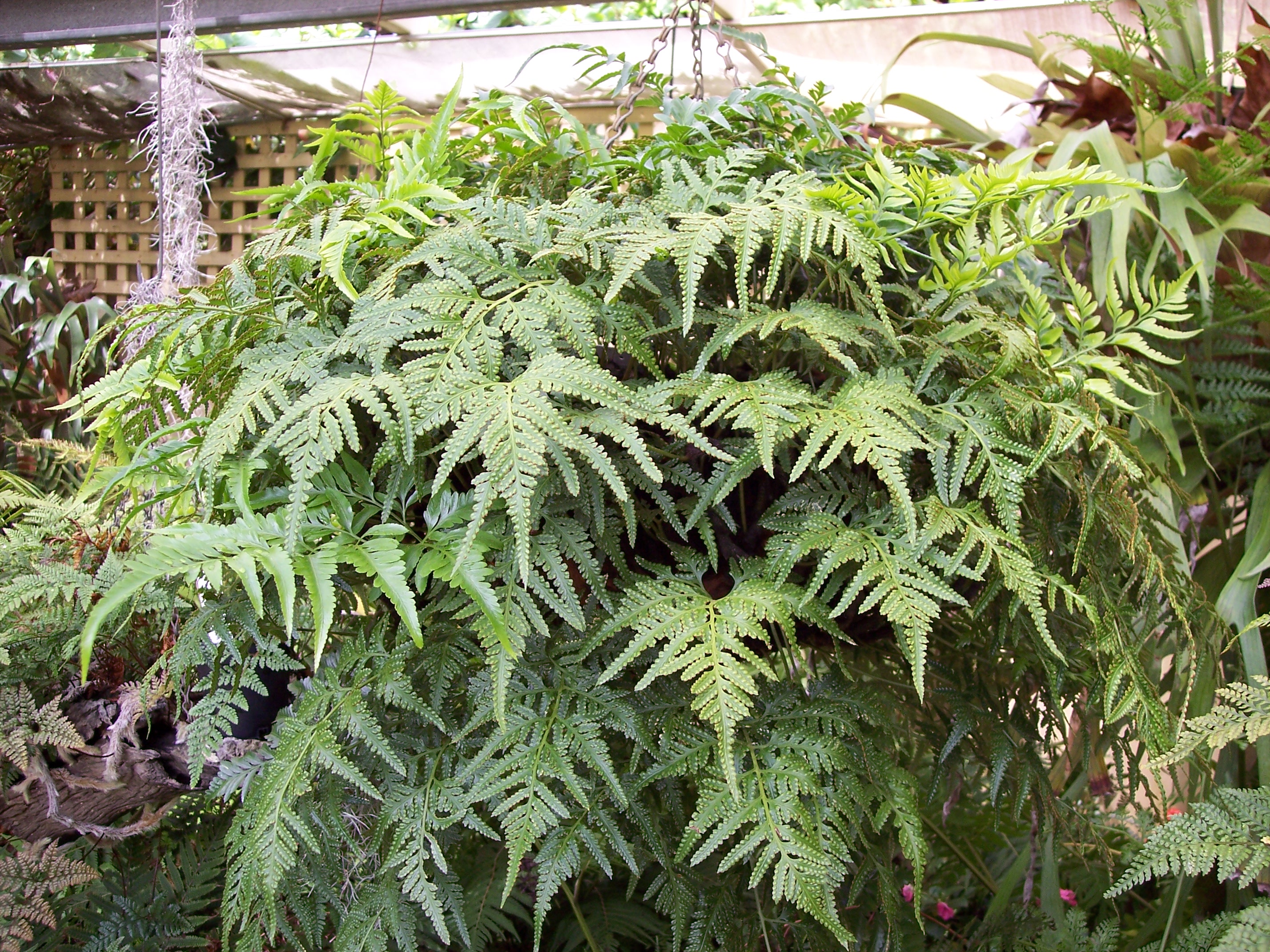
Pyrrosia is a fabulous but little-grown genus. Its leathery fronds resemble gum leaves. As with Hare’s Foot ferns, creeping rhizomes attach to the basket fibre and can eventually cover a wire basket. Fronds vary in size and can be plain or variegated, with plain, crested, congested, twisted or serrated shapes.
Black Caterpillar Fern
Scyphularia pentaphylla is another excellent creeping fern, with short-stemmed, glossy fronds and black-to-brown, furry rhizomes.
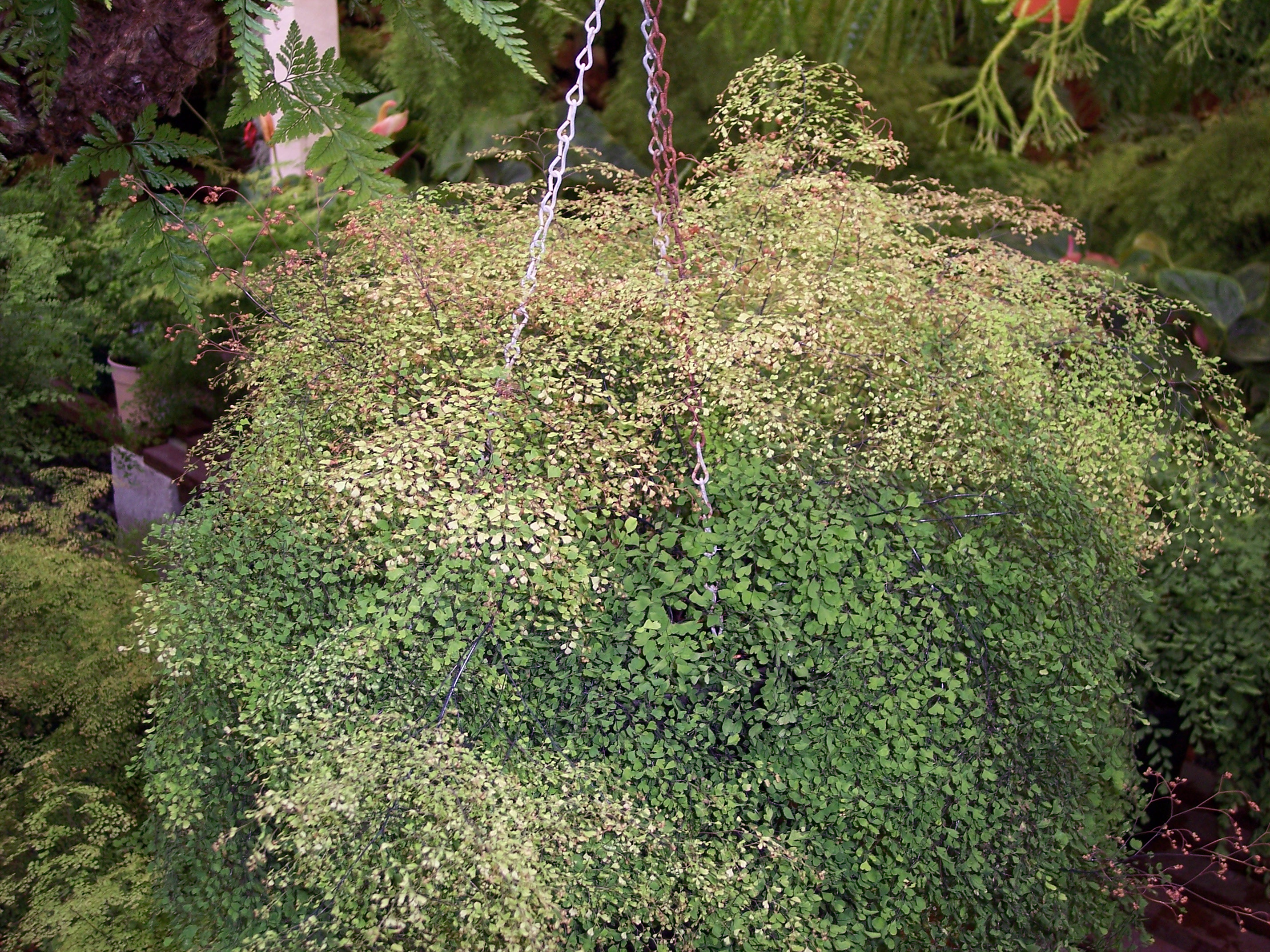
Maidenhair Ferns
Weeping Adiantum species are well suited to baskets and containers, with protection from wind. Suitable choices include Adiantum aethiopicum and A. raddianum cultivars Gracillimum, Triumph, Bridal Veil, Lady Supreme and Micropinnulum.
An elkhorn with a difference
For an unusual effect, plant Platycerium bifurcatum (Elkhorn) in a fibre basket. In time it can cover the container and take on the shape of a ball - always a talking point.