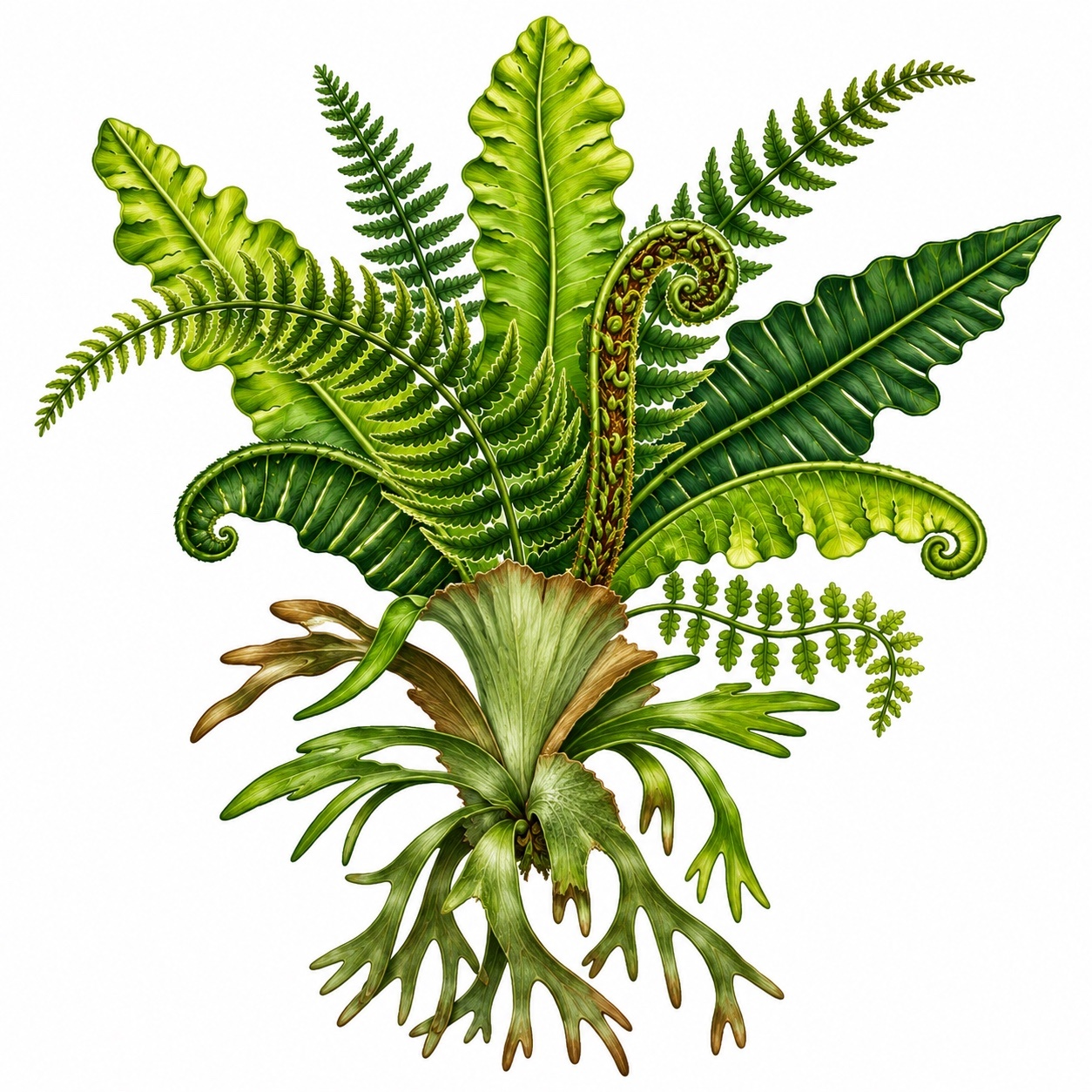
Easy Ferns to Grow in your Garden
Although these ferns will generally grow in pots on your patio, in your shade house etc., the emphasis here is on ferns that will happily grow in and around your garden, whether it be in beds, around a patio or verandah, or in the ground to complement the other plants that you may have. Each garden will be different in many aspects, so this will give you some guide to your ferns' requirements.
To grow ferns successfully, the majority of species need bright light, but not direct sun. Dappled light/shade, from a canopy of trees, shrubs or shade cloth, is most suitable. Ferns can accommodate some sun for a short period of the day, be it morning or afternoon. It is a bit of a misconception that because there is a shady or dark part of the garden, one assumes that ferns will thrive there. There are some ferns that won't mind being in such a situation, but the majority of species would struggle to survive.
Most ferns prefer a slightly acidic soil. However, there are always exceptions to every rule, and some ferns are alkaline lovers. Nearly all cultivated gardens would be suitable for fern growing, provided that the soil is well-drained. However, it must also be capable of retaining moisture. The addition of composts, composted pine bark chips or fines, and peat will help to keep the soil slightly acidic.
Ferns enjoy air movement around them, which helps to maintain humidity. By way of contrast, strong winds and draughts will decrease humidity, drying out the plants and soil, and damaging fronds.
Protection in the garden from wind, frost, excessive sun and sudden changes of temperature is essential for healthy ferns. A protected area will lend itself to increased humidity. Protection can be in the form of house walls, verandahs, fences, hedges, trees, shrubs, and shade cloth.
Ferns need sufficient moisture, especially during the warmer months. By the same token, the majority of ferns also prefer good drainage. The use of mulches will help to prevent plants from drying out. Mulches are also beneficial in that you will use less water. When mulching ferns be careful that the material does not cover the crowns or bases of the plants.
Generally, ferns require fertilisers during the warmer growing months, from spring to summer. If applying fertilisers outside of this period, applications at half-strength will suffice. Reduce fertilising during winter, as most ferns are then in a rest period. In fact, some ferns become deciduous during this period. Liquid, granular and slow-release fertilisers can be applied generally, including to ferns grown in pots. Use of well-rotted animal manures, especially sheep or cow, should be restricted to plants grown in the ground. Using manures on potted ferns can attract earthworms, which soon will work through the soil mix, breaking it down and causing drainage problems which eventually will result in loss of plants.
Ferns in the ground suffer little in the way of pests. Here, it is likely that the good bugs eat the bad bugs, maintaining a more-or-less pest free environment. The major ground-dwelling pests are slugs and snails, for which a wide variety of organic and chemical deterrents is available. For those averse to baiting these creatures with poisons, a pair of ducks might provide an alternative solution.
Some easy ferns to grow - a list of species available from some local nurseries:
| Specific name | Common name | Description | |
|---|---|---|---|
| * | Adiantum aethiopicum | Common Maidenhair | Hardy fern which will tolerate sun and cold conditions. Does best in bright light, protect-ed from wind. |
| Adiantum hispidulum | Rosy Maidenhair | A cold-hardy, variable fern. Will grow in good to poor soils, providing drainage is adequate. Shady to exposed situations. New fronds are rosy pink. | |
| * | Asplenium australasicum | Bird Nest Fern | Very robust, very hardy fern which will tolerate deep shade but does best in dappled shade. |
| * | Asplenium bulbiferum | Hen & Chicken, Mother of Millions | A tough, very adaptable fern easily propagated from plantlets which form on the fronds. |
| Asplenium cv Maori | Hardy, attractive fern for shady, protected positions. | ||
| Asplenium cv Pacific Princess | As above. | ||
| * | Blechnum cv Silver Lady | Beautiful, very hardy, fast-growing fern which will tolerate bright light to some sun, provided it is not allowed to dry out. | |
| Blechnum occidentale | Hammock Fern | Small, spreading fern for bright light areas. Particularly useful for edging. New fronds are pink or salmon coloured. Can become deciduous. | |
| * | Cyathea species | Lacy Tree Fern | A very popular, common tree fern for sun to partial shade. Hardy. Must be kept moist. |
| * | Cyrtomium falcatum | Japanese Holly Fern | An extremely adaptable, a hardy fern that will grow in acidic or alkaline soils. It will grow in sun to deep shade. A good fern for coastal areas. |
| * | Davallia - various species | Rabbit or Hares Foot Ferns | Although best suited to basket culture, these ferns will do well in the ground, provided they are in protected, semi-shaded positions. Use added pine bark chips, Vermiculite or Perlite and peat to improve drainage. They will happily grow over rockeries, decaying tree trunks and logs. They may become deciduous. |
| Diplazium esculentum | Edible Fern | Hardy, spreading fern for semi-shade. Can be invasive if not kept in check. | |
| Doodia aspera | Prickly Rasp Fern | Hardy. Prefers bright light, even some sun. Must have good drainage. | |
| * | Doodia media | Common Rasp Fern | As above. |
| * | Dryopteris erythrosora | Autumn Fern | Beautiful, hardy fern for shade or partial sun. New fronds have a copper to red colouring. May be deciduous in cooler months. |
| Histiopteris incisa | Bat Wing Fern | A hardy fern for sun to shade, but fronds are brittle in winds. Can be invasive. | |
| * | Lastreopsis species | Creeping Shield Fern | Attractive, soft, lacy creeping fern, easily contained and never a nuisance. It prefers shady conditions. |
| Macrothelypteris torresiana | A lacy fern that will tolerate sun to partial sun, providing soil is kept moist. | ||
| * | Microlepia speluncae | Clumping fern with beautiful, lime-green fronds. It will tolerate some lime in the soil. Can become deciduous. | |
| * | Microlepia strigosa | Slow-growing, spreading and clumping fern for moist, sheltered positions. | |
| * | Microsorum scandens | Fragrant Fern | Hardy, clumping fern. Will tolerate some sun to partial shade. Prefers bright conditions. Will grow up tree trunks. |
| * | Nephrolepis cordifolia | Fishbone Fern | Very hardy, indestructable fern which will grow in almost any situation. Can be invasive if not kept in check. |
| Nephrolepis cordifolia cv duffii | A small, dwarf variety of Fishbone Fern. Hardy and can be invasive but is easily kept in check. | ||
| Osmunda regalis | Royal Fern | Lime-green fronds. This fern loves to be kept very damp to wet, especially in warmer months. Protect from wind. Will become deciduous in colder months. | |
| * | Pellaea falcata | Sickel Fern | A variable and very hardy clumping fern. It will tolerate lengthy periods of sun, providing the soil is kept moist. |
| * | Platycerium bifurcatum | Elkhorn Fern | Grows well on tree trunks, likes dappled shade to bright light. |
| * | Platycerium superbum | Staghorn Fern | Grows well on tree trunks. Requires protection from wind and prefers a shady situation. |
| * | Polypodium aureum | Rabbit Foot Fern, Golden Polypody | Very hardy fern with variable form grey-coloured fronds. It enjoys bright light with protection from wind. Will become deciduous in winter. |
| * | Polystichum proliferum | Mother Shield Fern | Semi-shaded position. |
| * | Polystichum retroso-paleaceum | A very hardy fern for semi-shade. Can be partly deciduous during winter, depending on climate. | |
| * | Pyrossia lingua | Tongue Fern, Japanese Felt Fern | Although this fern makes an excellent basket specimen, it also does well in a semi-shaded garden, but must have good drain-age. Addition of pine bark nuggets and mulch beneficial. |
| * | Rumohra adiantiformis | Leathery Shield Fern | Very hardy fern with leathery fronds for shady to semi-shady situations. Cut fronds will keep in a vase or as floral art for long periods. |
| * | Todea barbara | Austral King Fern | Very hardy fern with leathery-looking fronds for semi-shade. Can become deciduous. |
| Woodwardia orientalis | Oriental Chain Fern | Hardy fern for partial sun and shade. | |
| Woodwardia radicans | European Chain Fern | Conditions as for W. orientalis. |
* - usually available from nurseries stocking ferns (depending on stocks), or visit our shows for plant sales.